 +91



The Dangerous Practice of Relying Solely on Bleaching Powder
Across older residential colonies in Jaspur, many households still rely on an outdated ritual: pouring a cup of raw bleaching powder (calcium hypochlorite) into rooftop Sintex water tanks once or twice a year. While chlorine does destroy some free-swimming bacterial cells, relying on chemical bleaching alone creates severe health hazards and fails to clean the tank:
- Formation of Toxic Carcinogenic THMs: Groundwater in Jaspur contains significant organic sediment and dissolved iron. When high-strength chlorine reacts with decomposing organic silt at the tank bottom, it produces Trihalomethanes (THMs) and chloroform byproducts, which have been linked to liver toxicity and skin disorders.
- Zero Physical Silt Removal: Bleach does not magically dissolve the 20 to 50 kg of dense mud, sand, insect fragments, and rust flakes resting on the tank floor. Every time the submersible pump fills the tank, this contaminated sediment is churned back into your drinking and bathing water.
- Severe Pipe & Geyser Corrosion: Excessive chlorine concentration corrodes brass tap spindles, oxidizes CPVC solvent weld joints, and destroys the glass-lined coating inside electric water geysers.
The Scientific Annual Water Tank Maintenance Schedule for Jaspur
To ensure safe, pathogen-free water year-round in the Terai climate, REFIXEL recommends adhering to this quarterly maintenance protocol:
1. March (Pre-Summer Deep Sanitization)
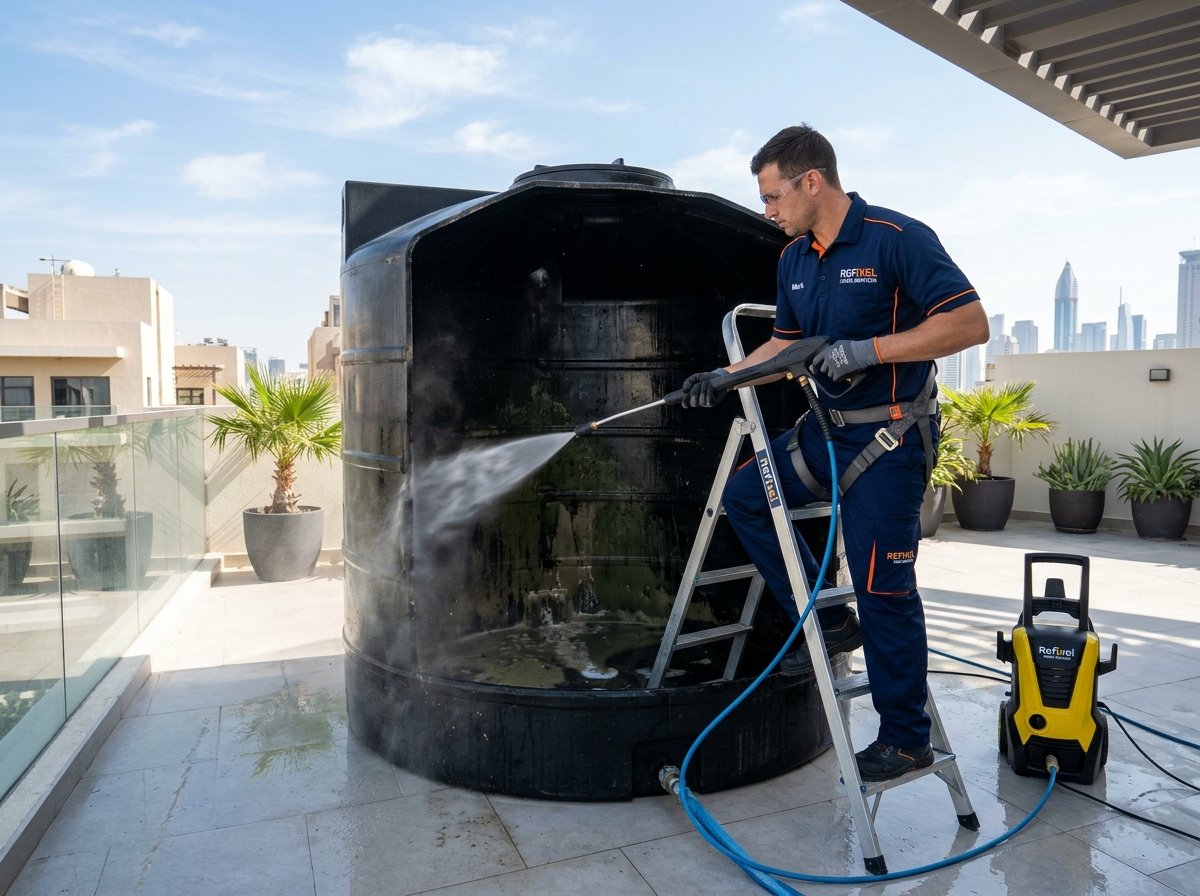
Before hot summer weather causes microbial colonies to multiply exponentially, perform a complete dewatering, high-pressure jet wash, and UV sterilization of both underground sumps and overhead tanks.
2. July (Post-First Monsoon Rain Check)
Heavy monsoon downpours frequently wash road silt and garden runoff into underground sump manhole frames. Inspect sump access lids, replace degraded rubber gaskets, and check for standing surface water infiltration.
3. October (Post-Monsoon Desilting)
The monsoon season deposits the year's heaviest volume of suspended mud from tubewell supplies into storage tanks. Schedule mechanical vacuum de-sludging before the winter geyser season begins to avoid clogging water heaters.
4. December (Pipeline Winter Flushing)
Flush all household delivery branches and clean tap aerator mesh screens to remove calcified mineral flakes, ensuring maximum water pressure across bathroom fixtures.
Preventing Mosquito Breeding & Vector-Borne Diseases
In addition to microbial contamination, broken or missing tank lids represent an open gateway for Aedes aegypti and Anopheles mosquitoes, turning rooftop water storages into breeding epicenters for dengue and malaria in Jaspur. During every service visit, REFIXEL inspects the integrity of threaded tank lids, installs stainless steel mosquito mesh over air vent pipes, and seals cable entry points used by automated float switches.
Professional Mechanized Tank Sanitization vs Local Cleaners
Hiring unverified local laborers who enter tanks barefoot with toxic phenyl or harsh detergents poses severe health risks for your family. REFIXEL hygiene technicians wear sterilized protective suits, utilize food-grade antibacterial hydrogen peroxide, and neutralize remaining pathogens with high-intensity UV-C radiation. Protect your children and elderly parents by booking an audited, mechanized tank clean today.